Five hundred episodes. Countless conversations. A front-row seat to the evolution of NFTs, Web3, artificial intelligence, gaming, culture, and the people building what comes next.
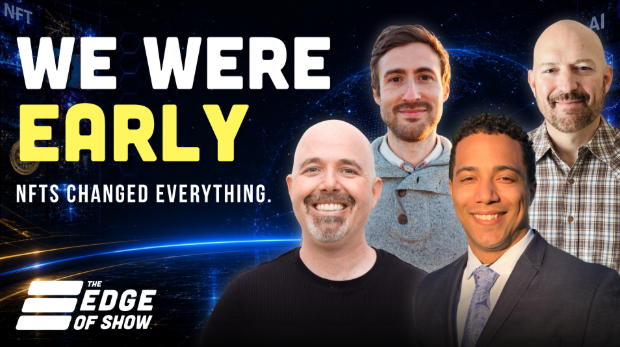
In this special milestone episode of The Edge of Show, Josh Kriger reunites with Edge co-founders Jeff and Ethan, along with longtime co-host Richard Carthon, to reflect on the journey that began during the earliest days of the NFT boom.
The conversation looks back at the origins of Edge of NFT, the energy of the early Web3 ecosystem, the lessons that came from building a media company and live events, and the rapid shift toward AI as the defining technology of the present moment.
Most importantly, Episode 500 is not only a celebration of what has been built. It is a conversation about what comes next.
We Were Early: The NFT Moment That Started It All
The Edge of Show began before NFTs became a mainstream cultural phenomenon.
In the early days, the team was still explaining what an NFT was—to listeners, friends, family members, and anyone curious enough to ask. The founders saw a new intersection of technology, creativity, entertainment, community, and ownership emerging before the market fully understood its potential.
That timing mattered.
The show launched within days of the Bored Ape Yacht Club mint, while NBA Top Shot and other early digital-collectible projects were beginning to capture global attention. What started as a niche conversation quickly became a cultural and financial tidal wave.
“We caught the wave right before it became a tidal wave,” Ethan recalls.
For Richard Carthon, who had followed CryptoKitties and early NFT projects since 2018, the lesson was simple: when you discover a meaningful innovation early, taking a small step can matter more than waiting for complete certainty.
The Energy, the Community, and the Hard Lessons
The early NFT and Web3 era was defined by extraordinary energy. Creators, collectors, developers, founders, and brands were testing entirely new models for ownership, identity, digital culture, and community.
The Edge team remembers that period as a playground of creativity and possibility. They also remember the less glamorous side: the relentless pace of content production, complex event logistics, difficult business relationships, and the pressure of operating in a fast-moving industry.
Jeff reflects on the importance of integrity during moments when opportunity moves faster than trust.
New technology waves can attract builders with long-term vision, but they can also attract people looking for quick gains. For Edge, the goal was always to focus on the builders, creators, and communities who were working toward something meaningful.
That principle carried into the company’s live-event work, including NFTLA and other experiences that brought the digital world into physical spaces.
From Digital Communities to Real-World Connection
One of the biggest lessons from the Edge journey was that the future of digital culture still depends on human connection.
Live shows, galleries, conference sessions, hackathons, and community gatherings gave people a chance to move beyond online usernames and form real relationships. The team saw how in-person experiences could strengthen trust, create collaboration, and make emerging technology more accessible.
For Richard, working on NFTLA captured both sides of that reality: the excitement of bringing a major event together and the immense effort required behind the scenes.
“There’s a lot of energy, there’s a lot of time, there’s a lot of logistics that go into putting on an amazing event,” he says.
The team also remembers unforgettable moments, including celebrating actor William Shatner’s 92nd birthday at an Edge event while launching a new project.
How AI Changed the Conversation
While The Edge of Show began in the NFT and Web3 era, the technology landscape has changed dramatically.
Artificial intelligence is now transforming how companies operate, how creators make content, how teams conduct research, and how people interact with digital and physical systems. What once seemed experimental is becoming practical infrastructure.
The team discusses how quickly AI has advanced from early chatbot experiments to tools that can support research, create content, write code, build applications, automate outreach, and assist with business operations.
Richard reflects on the speed of this change, noting that the progress from early prompting experiments to today’s AI-powered application-building tools has been difficult to comprehend.
The group also explores the next major shift: AI moving from digital environments into physical ones through robotics, autonomous vehicles, and intelligent systems.
AI, Robotics, and the Move From Digital to Physical
AI is no longer only about text on a screen.
Autonomous driving, robotics, intelligent devices, and automation are beginning to bring AI into daily physical life. The conversation highlights how self-driving vehicles, robotic systems, and AI-enabled hardware may reshape transportation, work, productivity, and society.
Josh sees this transition from digital to physical as one of the most consequential developments ahead.
“When you combine the power of AI not only to shape businesses with the ability to give those powers to an intimate technology object, it changes everything,” he says.
The future may involve AI systems that do more than answer questions. They may make decisions, manage tasks, operate machines, and collaborate with people in more direct and personal ways.
The Importance of Authenticity in an AI Era
The team also addresses a growing concern: AI-generated work that feels generic, impersonal, or disconnected from human intent.
AI can be an extraordinary collaborator, helping people structure stories, create images, develop applications, and accelerate work. But the best results still require human judgment, clarity, originality, and care.
As Jeff notes, people can increasingly recognize when content is generated without a genuine voice behind it.
The opportunity is not to use AI to avoid thinking. It is to use AI to amplify thoughtful work, creativity, and human expertise.
The Next Chapter: Edge of AI Advisory Services
Episode 500 also marks the introduction of a new chapter for the company: Edge of AI Advisory Services.
Over the years, the Edge team has interviewed hundreds of founders, operators, researchers, creators, and innovators. They have also applied AI internally and advised organizations across industries.
That experience is now being brought forward through Edge of AI Advisory Services, helping businesses understand where AI can create practical value across sales, lead generation, marketing, customer service, operations, strategy, and competitive intelligence.
Josh describes it as a full-circle moment, connecting his background in management consulting with the knowledge built through years of media, events, partnerships, and hands-on innovation work.
“We have a unique opportunity with what we learned firsthand, applying AI to our company [and] helping other organizations leverage AI,” he says.
Edge of AI Advisory Services is designed to help organizations move faster, make better use of emerging technology, and build toward the future with more confidence.
500 Episodes—and the Next 500
The Edge of Show has evolved from an NFT-focused podcast into a broader platform exploring the technologies and cultural shifts shaping the future.
The mission, however, remains consistent: stay curious, find the edge, and keep looking ahead.
Whether you discovered the show at Episode 1, Episode 100, Episode 400, or today, this milestone belongs to the guests, listeners, partners, collaborators, and community members who have helped make the journey possible.
Here’s to the next 500.
Key Topics Covered
- The origin story of The Edge of Show and Edge of NFT
- The early days of NFTs, NBA Top Shot, CryptoKitties, and Bored Ape Yacht Club
- Lessons from building a Web3 media company
- The role of live events and in-person community
- NFTLA, hackathons, and Edge’s event journey
- The shift from Web3 to artificial intelligence
- AI as a creative and operational collaborator
- Robotics, autonomous vehicles, and the digital-to-physical transition
- Authenticity and human judgment in an AI-powered world
- The launch of Edge of AI Advisory Services
Episode Highlights
“We caught the wave right before it became a tidal wave.” — Ethan
“The Edge represents the next frontier. We’ve always stayed ahead.” — Jeff
“Staying updated on the possibilities of tomorrow.” — Richard Carthon
“The most important part of the next journey is more hands-on.” — Josh Kriger
“Stay curious, find the edge, keep looking ahead.” — Josh Kriger
People and Resources Mentioned
- Josh Kriger
- Jeff
- Ethan
- Richard Carthon
- The Edge of Show
- Edge of NFT
- Edge of AI
- Edge of AI Advisory Services
- NFTLA
- NBA Top Shot
- Bored Ape Yacht Club
- CryptoKitties
- Blockchain Wayne
- William Shatner
- Waymo
- Claude
- ChatGPT
- Perplexity
- Zuber Lawler
About the Hosts
Josh Kriger is the co-founder and host of The Edge of Show and Edge of AI. He is an entrepreneur, media leader, and innovation strategist focused on the intersection of AI, Web3, emerging technology, culture, and business.
Jeff and Ethan are co-founders of Edge of Company and helped build the original vision behind Edge of NFT, The Edge of Show, and the company’s community, media, and event initiatives.
Richard Carthon is an entrepreneur, investor, host, and former Edge of Show co-host. He joined the show for more than 80 key episodes and brings deep experience in blockchain, Web3, and emerging technology.
Listen to the Full Episode
Follow The Edge of Show for conversations with the innovators, builders, and cultural leaders shaping what comes next.
To learn how Edge of AI Advisory Services can help your organization apply AI across strategy, marketing, sales, operations, and customer experience, visit edgeofai.xyz.